
On the occasion of the International Day of Women and Girls in Science, we proudly celebrate the incredible contributions of women in the field of science. This day highlights the importance of encouraging young girls to pursue careers in STEM and showcases the powerful impact women are making in these fields.
We’ve reached out to our female staff and students to share their stories. Below, we proudly feature quotes and bios from some of our inspiring women in science, each reflecting on their research journeys and the challenges and triumphs they have experienced along the way.
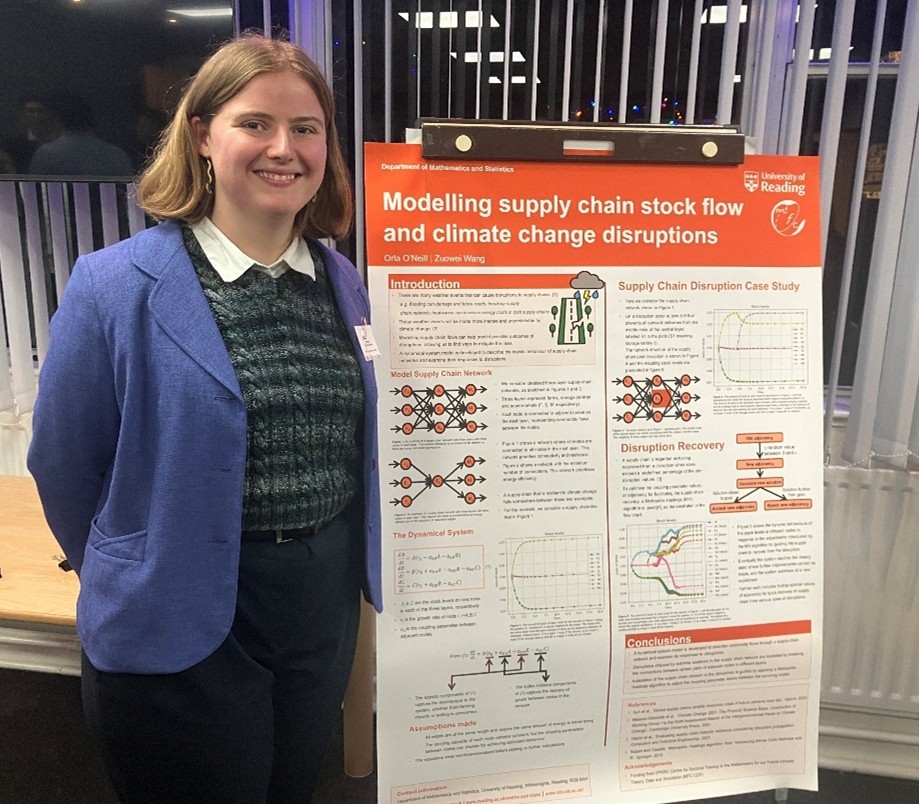
Orla O’Neill
Orla O’Neill
Second year MFC CDT PhD student at University of Reading
Orla started her research journey in the University of Galway, Ireland, where she completed her BSc in Theoretical Physics. During her time there, she became inspired to work in climate change and to try use her skills as a scientist and researcher to make the world a better place.
To that end, she moved to the Netherlands to do her MSc in Climate Physics at Utrecht University. Her thesis looked at how we can use physical science to help predict climate migration patterns in Bangladesh. She has a paper on it which you can read here: https://www.frontiersin.org/journals/climate/articles/10.3389/fclim.2025.1567481/full
Now she is at the University of Reading to do her PhD. She is looking at how dynamical systems can be used to model cold supply chains and their vulnerabilities to climate change. She is also finding ways to use this model to optimise supply chain routing, so that the networks can be more resilient to weather related disruptions. While working on her PhD she is also making time for community outreach and policy making. These are important to her as she believes that knowledge should be shared for the betterment of society, rather than kept in academia.
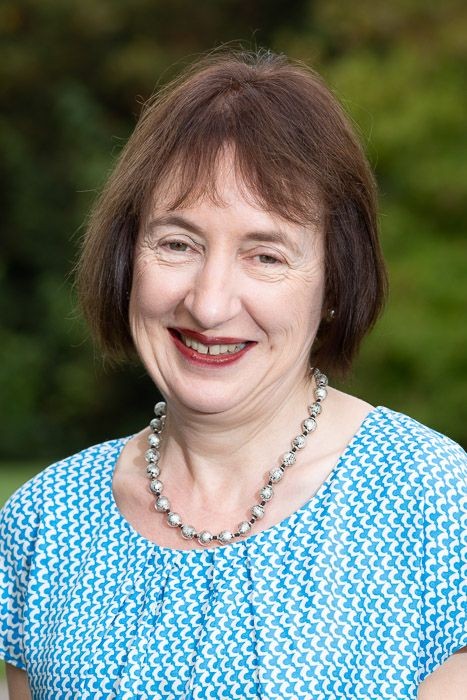
Jennifer Scott
Jennifer Scott
MFC CDT Director at University of Reading
Meet Jennifer Scott. Jennifer has a dual career, working at both the University of Reading and STFC Rutherford Appleton Laboratory. At the Rutherford Appleton Laboratory, she holds a Senior UKRI Individual Merit Fellowship and is a member of the Computational Maths Group, At Reading, she is a Professor of Applied Mathematics and the Director at Reading of the MFC CDT. She has published over 90 research papers in academic journals and coauthored an open access research monograph https://link.springer.com/book/10.1007/978-3-031-25820-6.
Jennifer has spent much of her career researching methods for solving large-scale linear systems of equations. Throughout her career, Jennifer has navigated working in a male dominated industry.
For International Day of Women and Girls in Science, she shared some of her insights and reflections from this experience: “I’ve been very fortunate that numerical linear algebra is a community in which there has been a reasonable number of women for quite a long time. I remember when I was a PhD student going to a conference, which was relatively small, and being the only woman there; I wouldn’t have liked to have worked in that kind of environment forever. It can still be difficult for women. For several years, I was part of the London Mathematical Society Women in Mathematics Committee. We worked on raising awareness regarding gender equality, for example, ensuring women are included on the list of invited speakers when organising conferences. But also taking one step back and including women in the organising committee. I think it’s in everybody’s interest to broaden things out, and hopefully this is happening more now. When viewing a job specification, the male tendency is to look at the things they can do and to feel confident about applying, while the female perspective can be to look at the things that they can’t do and feel that they’re not qualified for and so are discouraged from applying. Women need to be encouraged to apply and to seek out opportunities, and to have the confidence that they can do it.”
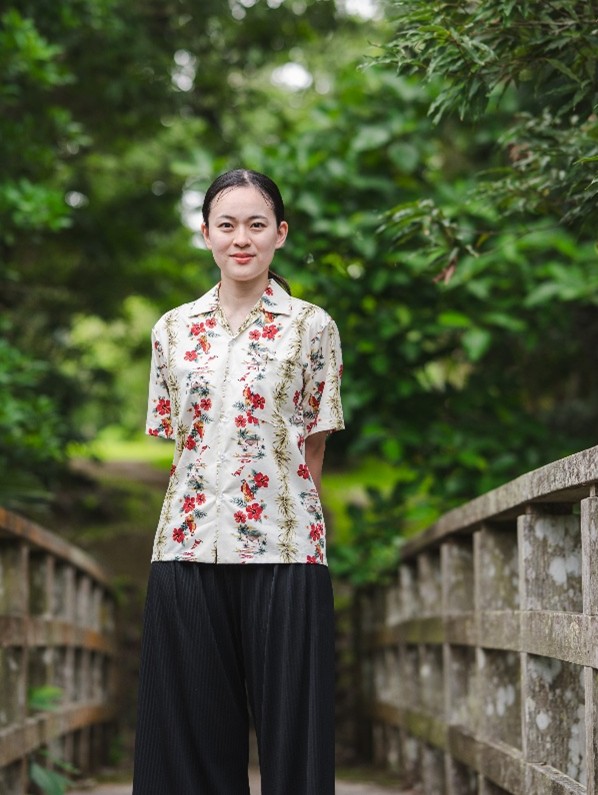
Maori Inagawa
Maori Inagawa
First year MFC CDT PhD student at University of Reading
“I am driven by the power of Statistics to combat climate change, and energised by collaborative energy of like-minded researchers!”

Arianna Ferrotti
Arianna Ferrotti
Second year MFC CDT PhD student at University of Southampton
Arianna (aka ariantartide) enrolled in the BSc in Physics at Università di Roma La Sapienza in September 2017 and graduated from home mid-pandemic in November 2020. Physics was never her one and only possibility, as she liked most of the subjects in school: for some time, she had considered classical studies, languages and videography. Little science there. However, she had got to know of the Italian astrophysicist Margherita Hack through her books and outreach activities, and found her inspiring. On the other hand, she was also very strongly environmentally conscious, and physics seemed like the key to many doors.
So, she proceeded to the MSc in Astronomy and Astrophysics, which she completed in May 2023, also at Sapienza, after having spent some months studying at Université Aix-Marseille in France. Meanwhile, in Rome, she had joined a quite renowned group of climate activists, which was very enriching and educational. It gave her amazing opportunities, particularly in scientific outreach and children’s education. Her master’s thesis, “Observational imprints of a non-universal initial mass function”, stood as a great first research experience under the supervision of another inspiring astrophysicist, Professor Raffaella Schneider. Some of its results are published in a paper, which you can find here: https://academic.oup.com/mnras/article/529/4/3563/762304.
After the MSc, she got accepted for a PhD in astrochemistry somewhere else. She dropped out after 1 year, reluctantly, due to a problematic work environment. Dropping out wasn’t an easy choice, as it also came with moving (again) countries. Other women around her had also had a similar experience.
Only after that, she learned about the MFC CDT program and applied. Hopefully, this could remind the reader that plans often do not go as planned: linear paths are rarely possible, especially for minorities.
Now Arianna is a second-year PhD student at the University of Southampton, based at the National Oceanography Centre, a vibrant and engaging research environment. She can also count on a great team of supervisors.
She is once more working on observational imprints, this time of the transport of Antarctic Bottom Water, which supplies the densest layers of the abyssal ocean circulation. Indeed, this process is both key to Earth’s climate and sensitive to climate change, particularly through Antarctic meltwater, but it is also difficult to monitor.
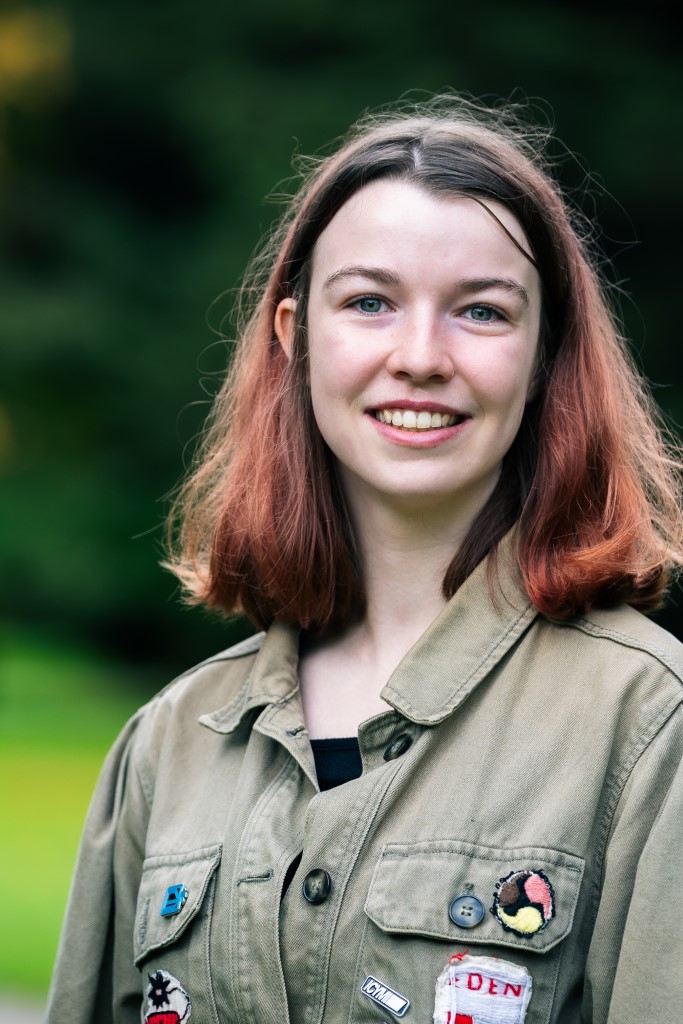
Emma Rothwell
Emma Rothwell
First year MFC CDT PhD student at Imperial College London
“I’ve always enjoyed doing maths, and so it felt natural to go on to study maths at university. After graduating, I worked in business analytics for a while, as I thought that was a natural next step due to its proximity to maths. It turns out I am much happier working in applied mathematics and so returned to university on the MFC program. Despite the change in career, I’m glad that I had a slightly non-linear path in science, as the real-world experience has helped me with multiple skills, such as confidence in presenting my results.”
In addition to the academic achievements, Emma recently participated in the Imperial Junior Girls Maths Contest at Imperial College London, where they contributed to inspiring the next generation of STEM enthusiasts.
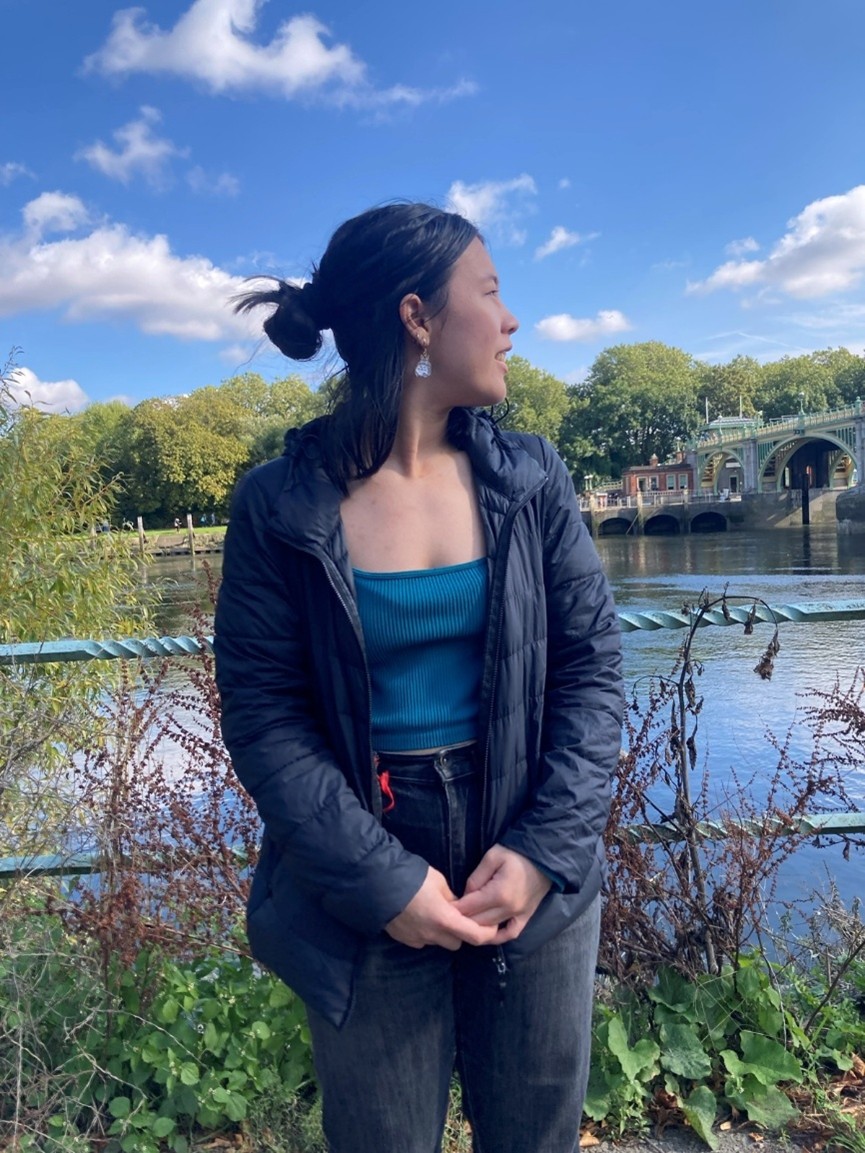
Natasha Standing in front of some fluid dynamics in action.
Natasha Ann Johnson
First year MFC CDT PhD student at Imperial College London
I first became interested in science after reading Surely You’re Joking, Mr. Feynman! – I loved how Richard Feynman presented science as something playful, not just rigorous. Mathematics, in particular, embodies this for me: solving a problem at university level is a bit like building a Lego set – you start with small pieces, try to fit them together to build bigger blocks, and see where it goes. My PhD research is in fluid dynamics. What drew me to this area is how grounded it is in the real world – I enjoy the process of starting with physical intuition, building a picture of what I think should happen, and then using mathematics to make that understanding precise. Sometimes the maths confirms your intuition, and sometimes it turns out you’re totally wrong, and you have to go back and figure out what you neglected. Another thing that drew me to applied maths, and our CDT in particular, is its universality – ultimately, the language of nature is mathematics, and being able to use it to tackle problems relevant to the climate crisis feels especially meaningful.
In addition to the academic achievements, Natasha recently participated in the Imperial Junior Girls Maths Contest at Imperial College London, where they contributed to inspiring the next generation of STEM enthusiasts.
Almut Veraart
Almut Veraart
Professor of Statistics in the Department of Mathematics and MFC CDT Deputy Director at Imperial College London
I wanted to be a high school teacher of mathematics when I was little. The path I ended up taking hasn’t changed too much! I just swapped the classroom for lecture halls, research seminars, and, now, co-directing the Mathematics for our Future Climate CDT.
My journey into academia took me from studying mathematics and economics in Ulm, Germany, to Oxford as a Rhodes Scholar, where I completed an MSc and DPhil in Statistics, and then on to a postdoc in Denmark before joining Imperial in 2011. Along the way, I’ve had the chance to work across statistics, mathematical finance, stochastic modelling, and, more recently, the mathematics underpinning our understanding of climate. What I love most about being an academic is the freedom to work on whichever research project I find interesting. After my PhD, my research focussed initially on financial volatility modelling, but I came across new areas which I found very interesting and decided to venture into them. I very much enjoy this kind of flexibility. It gives me the chance to explore and contribute to many different areas of mathematics and statistics, from ambit stochastics and trawl processes to models that can capture complex dependencies in both financial and environmental data. I think this aspect is pretty unique to being an academic.
My advice to any young woman considering an academic career? To definitely do it! I think an academic job is very rewarding. Clearly, it is not always easy. You may need to move a lot, take up different positions, deal with setbacks. But that is also what makes it so exciting: you get to meet new people, travel to exciting places, discuss new ideas, and contribute to knowledge that matters. I have always been very fortunate to have supportive supervisors, mentors, and colleagues, and that has made all the difference. The job also comes with incredible flexibility, which makes it possible to combine family life and a full time career. Through the MFC CDT, I am lucky to work with a brilliant and diverse group of students and researchers tackling some of the most important mathematical challenges of our time: understanding and responding to climate change.
Hilary Weller
Hilary Weller
Associate Professor in Department of Meteorology and MFC CDT Numerical Analysis Lecturer at University of Reading
“I am privileged that the fact that I am a woman does not seem to be particularly important to my career as a scientist. I am grateful to the people who have come before who have torn down barriers, and to my colleagues who are not sexist. I am grateful to the University of Reading who allowed me to take my career more slowly when my children were young. There are other barriers that need to be broken now. We do not have enough cultural diversity in science, and some trans women are having a tough time.”
Alessandra Luati
Alessandra Luati
Professor of Statistics and MFC CDT Statistics & Probability Lecturer at Imperial College London
I joined Imperial four years ago as a Provost’s Visiting Professor of Statistics in the Department of Mathematics, and then I stayed, as a Chair in Statistics. I come from the University of Bologna, where I have been professor of Statistics for long. I have a Ph.D. in Statistics awarded at the University of Bologna, though I mainly studied in Denmark at the University of Aarhus where I developed a thesis on Statistical inference for finite dimensional quantum systems. I then got a fellowship in time series so my main research interest, since then, are mathematical statistics, time series and recently non-linear dynamic models.
The University of Bologna has a longstanding reputation, being funded in 1088 and featuring about 80thousand students. Interestingly, the first salaried woman to teach at a University was in Bologna, she was Laura Bassi, a physicist, in the 18th century (she was at one time the university’s highest paid employee). Despite this, the percentage of female professors today is, in Bologna, as at Imperial, still quite low and we know that figures dramatically collapse when we look at Mathematics.
Reflecting on my journey, as a woman in mathematics, and in particular, if I think back to my first conferences and workshops, which were on Stochastic and Quantum Physics; on Matrices and Statistics; on Numerical Linear Algebra; on Time series and signal extraction, the memory is vivid: the presence of female professors reflected the dramatic percentages I was referring above.
When I look back at the group photos that are usually taken, that is so evident. I never felt discriminated, but I felt sometimes alone. There were few or no female senior academics, or female keynote speakers, or such a few of them that they looked like an exception or someone exceptional and unparalleled. On the other hand, women professors in mathematics and STEM should be the rule, so that they become role-models for all the coming generations of young scholars in STEM. As I heard by the journalist Angela Saini a couple of years ago, when she was presenting one of her books at Women@Imperial week, the key to power is support. I really feel it is important, now that female academics in key roles are not a rarity anymore, that we support each other and encourage the new generation of female scholars to cultivate their passion for research with confidence.
Thank you to all the students and staff at MFC CDT who serve as role models to young, aspiring women, providing a powerful reminder of the incredible contributions women make every day.
To conclude, we’d like to share a short video featuring a CEE PhD student at Imperial and her journey as a research student.